
For professors at a research university, proposal writing is a vital part of a tenure-track position. It can be extremely rewarding — setting an academic career on a trajectory of success. Yet there is also the realization that many proposals — despite the hard work put into them — are not initially selected for funding.
To help support faculty in this process, The University of New Mexico has developed resources that address some of the important skills needed, from finding the right funding opportunity to creating a budget to developing and writing a compelling research proposal.
One successful effort that has been under way for the last couple of years at UNM is geared toward one particular award — the National Science Foundation CAREER Award — which is a highly regarded award focused on helping early career faculty members establish a successful research program.
The NSF CAREER cohort was established in 2025 by Eva Chi, associate dean for faculty affairs in the School of Engineering, Hannah Yohalem, assistant director of research strategy and programming for the UNM Faculty Research Development Office (FRDO), and Isela Balli, program operations director of the Research Support Office in the School of Engineering.
This year alone, there have been seven NSF CAREER Award recipients at UNM, six of whom were from the School of Engineering. In late July, Eric Lindsey, an assistant professor in the Department of Earth and Planetary Sciences in the College of Arts and Sciences, was notified that he too received an NSF CAREER Award. His project is titled “From Kinematics to Physics: A Global, Time-Dependent Investigation of Megathrust Frictional Locking.”
Although UNM has traditionally had NSF CAREER Award winners each year, the number this year was higher — and nearly all of the recipients this year participated in the cohort. The initial cohort had 23 participants, and in 2026, that number jumped to 32.
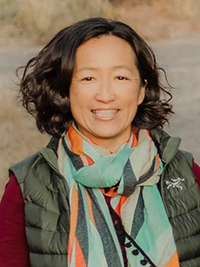
The idea for the cohort stemmed from a couple of areas. One was wanting to create a more comprehensive preparation resource for the NSF CAREER, which is a highly sought award. Although there are other early career faculty awards, Chi said that the NSF CAREER is an award that crosses disciplines and “uniquely benefits early career faculty.”
“With the NSF CAREER, it’s not just about money,” she said. “It has a tremendous impact in starting a faculty member’s research program, in addition to having a very positive impact on tenure and promotion.”
Chi won an NSF CAREER Award in 2012 for “Interface-induced Misfolding and Aggregation of Intrinsically Disordered Proteins.” She still remembers how receiving that award gave her a sense of belonging in academia and her area of research at the beginning of her career.
“It felt like a validation of my research and all the things I was doing,” she said. “I credit it with really launching my career.”
Within the last couple of years, Chi and Yohalem say there have also been significant changes in the National Science Foundation in response to shifting federal research priorities. Awards like the NSF CAREER are still vital, but they said it was helpful to create the cohort for faculty to understand the current landscape and requirements as faculty prepare their proposals.
In the cohort, various topics are covered, including general proposal writing tips, how to write a one-pager of your proposal, how to integrate your education and research plan, working on your budget with your faculty research support officer (FRSO) or department administrator, how to incorporate reviewer feedback into the narrative, and how to obtain a department chair letter.
Chi, along with FRDO staff members, work with the cohort in reading and commenting on drafts at any part of the process. She also provides feedback on the integration of the research and development plans. Faculty Research Development Office staff help the cohort with structuring the proposal, aligning it with the solicitation, and providing editing for clarity and grammar.
Lindsey participated in the cohort last year and credits the guidance he received there with his successful award proposal.
“I know I wouldn’t have had the motivation to put it all together without the cohort, and the workshops were really helpful for me to understand how to get the right emphasis,” he said, noting that focus was especially useful for changes in the NSF CAREER proposal’s education and outreach section, which were implemented since 2025 in response to federal research priority shifts.
John King, assistant professor in the Department of Chemical and Biological Engineering, joined UNM in fall 2024 and received the CAREER Award in 2026 on his first attempt for “Understanding How Nucleic Acids and Amino Acids Interact.” He joined the NSF CAREER cohort group largely due to the influence of fellow colleagues (and some fellow 2026 recipients), looking to learn what he could, not just for NSF CAREER, but for proposal writing in general.
King was pleasantly surprised to have received the award on his first attempt, knowing that it can take two to three attempts for some to find success.
In addition to the cohort, King credits the resources of the both the Faculty Research Development Office as well as the faculty research support officers distributed across a central office within the UNM Research office and five UNM schools and colleges who work closely with researchers and collaborate with partners like the Office of Sponsored Projects.
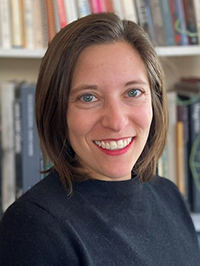
Thanks to the combined forces of centralized research support and college-embedded research support, including departmental administrators who also support proposal submissions, this model allows research development expertise to be embedded close to faculty while remaining coordinated centrally, ensuring both consistency and flexibility in support, Yohalem said.
“The FRSO network was created to amplify the work that is being done in units and is an incredible asset to the UNM research community,” said Hannah Torres, Faculty Research Development Office director. “It's a highly collaborative group with a deep wealth of knowledge, and it’s a wonderful community to be part of at UNM.”
In the School of Engineering, part of that faculty research support network is Isela Balli, who manages a faculty research support officer. King said that her involvement and expertise was crucial to him having what he needed to create a successful proposal and provide guidance on subjects including budgeting, crafting of a research agenda, developing an effective educational plan, submission deadlines and more.
“Isela was my go-to for any questions that came up along the way,” King said.
Balli said that she has been pleased by the success rate of the cohort.
“I think we have made a good impact the last couple of years,” Balli said. “The participants from last year had a great success rate, so hoping we can do the same this year. I think it was a good experience for researchers to understand the process and expectations.”
In the summer of 2026, there were 18 NSF CAREER proposals submitted from UNM, broken down as follows:
- Nine from School of Engineering
- Six from the College of Arts and Sciences
- One from the Ellis School of Business Leadership
- One from the College of University Libraries and Learning Sciences
- One from a Category III research center (which focus on interdisciplinary research beyond the boundaries of a single discipline, department, or college).
Yohalem said the current iteration of the NSF CAREER cohort is not the first or only attempt at forming such a support group. From around 2017 to 2021, there was a CAREER writing group, a webinar series between 2022 and 2024.
But combining the focused effort of a research-intensive school with the expertise and resources of the Office of the Vice President for Research is what has made this effort particularly effective.
“Our collaboration created a sweet spot,” Chi said.
Although a lot of the participants and awardees have come from engineering or sciences, Yohalem and Chi remind faculty that NSF CAREER is open to a wide variety of disciplines, such as social sciences. Questions about proposal focuses can be directed to the FRSO in your school or college, or to frdo@unm.edu.
UNM is planning to conduct another cohort for next year. An announcement will be sent out late this year or in early 2027. For questions or additional information, contact frdo@unm.edu.


