


For many families in New Mexico, finding early childhood healthcare in their native language isn’t just difficult—it’s often out of reach. This language gap can be especially critical when it comes to children with autism or developmental delays, where timely communication support is essential.
To help close that gap, the University of New Mexico Department of Speech & Hearing Sciences has launched Project MESA, a new initiative to train the next generation of bilingual and culturally responsive speech-language pathologists (SLPs).

Now in its first year, the five-year grant-funded program is designed to serve both families and future clinicians—preparing graduate students to provide care that honors the linguistic and cultural backgrounds of the communities they serve.
The name MESA stands for Multilingual, culturally responsive, Early childhood Social communication Approaches. The project specifically prepares students to work with children from birth to age six who have autism spectrum disorder (ASD) or other developmental disabilities or delays.
“We’re not just building skills—we’re building trust,” said Associate Professor Cindy Gevarter, Project MESA director. “When families see themselves reflected in their providers, that’s when real progress happens.”
According to the American Speech-Language-Hearing Association (ASHA), fewer than 9% of certified SLPs nationwide identify as bilingual or multilingual. That mismatch creates challenges—especially in New Mexico, where many families speak Spanish or Indigenous languages such as Diné.
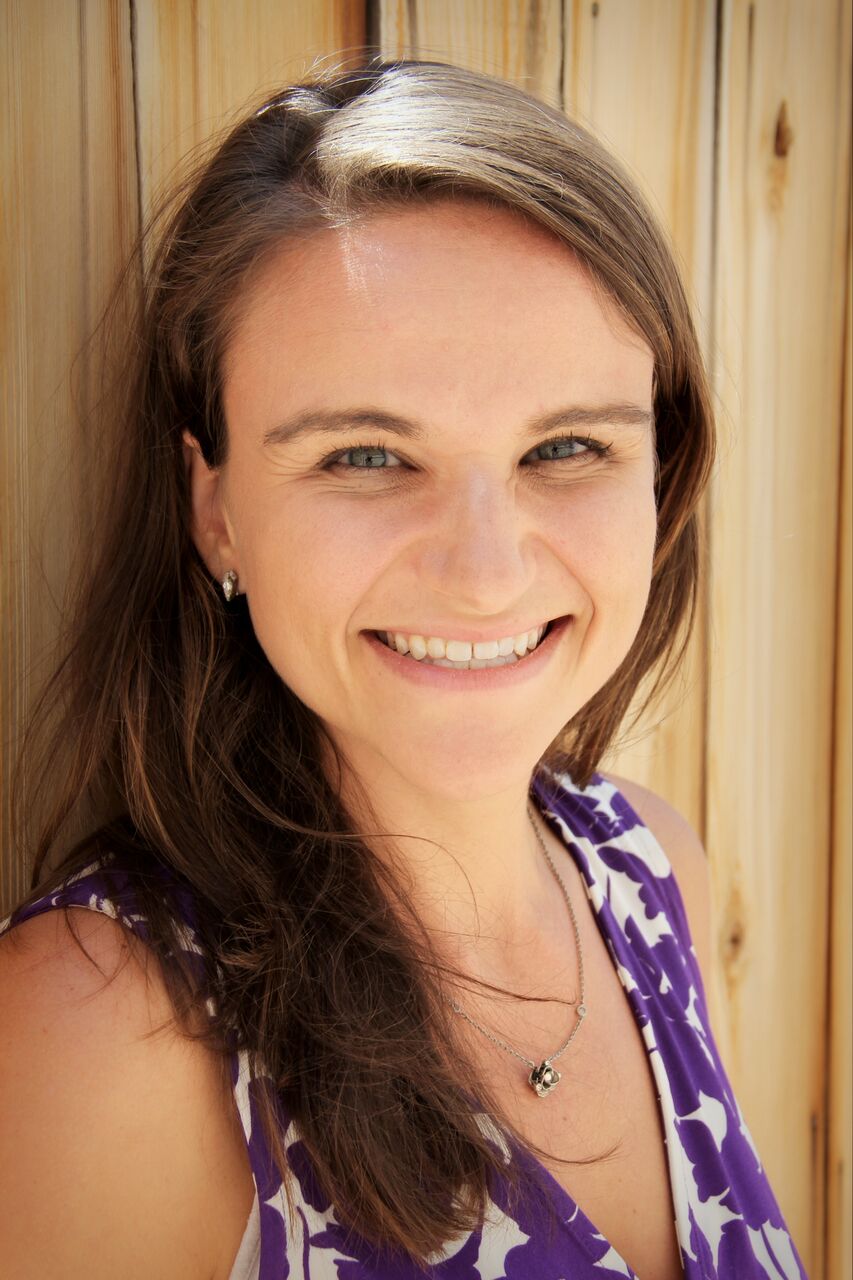
“We know that Hispanic families in the United States often access early intervention services at lower rates,” said Gevarter. “Sometimes they discontinue services altogether when there’s not a strong cultural match or when their needs aren’t being met. Our goal is to reduce those barriers.”
Rather than rely solely on interpreters, families overwhelmingly prefer care delivered directly by bilingual professionals. Research also shows that culturally aligned care can improve long-term outcomes and family engagement.
“There’s a big push in our field to grow cultural humility, competence, and responsiveness,” said Jessica Nico, Project MESA grant manager. “With Project MESA, we’re embedding those values into every aspect of our training from the very beginning.”
The bilingual concentration is embedded into every part of Project MESA’s curriculum. Students receive additional coursework focused on bilingual assessment, cultural humility, and culturally responsive care, along with a specialized class on international and multicultural intervention. These electives deepen their understanding of how to serve diverse populations through both research and practice.
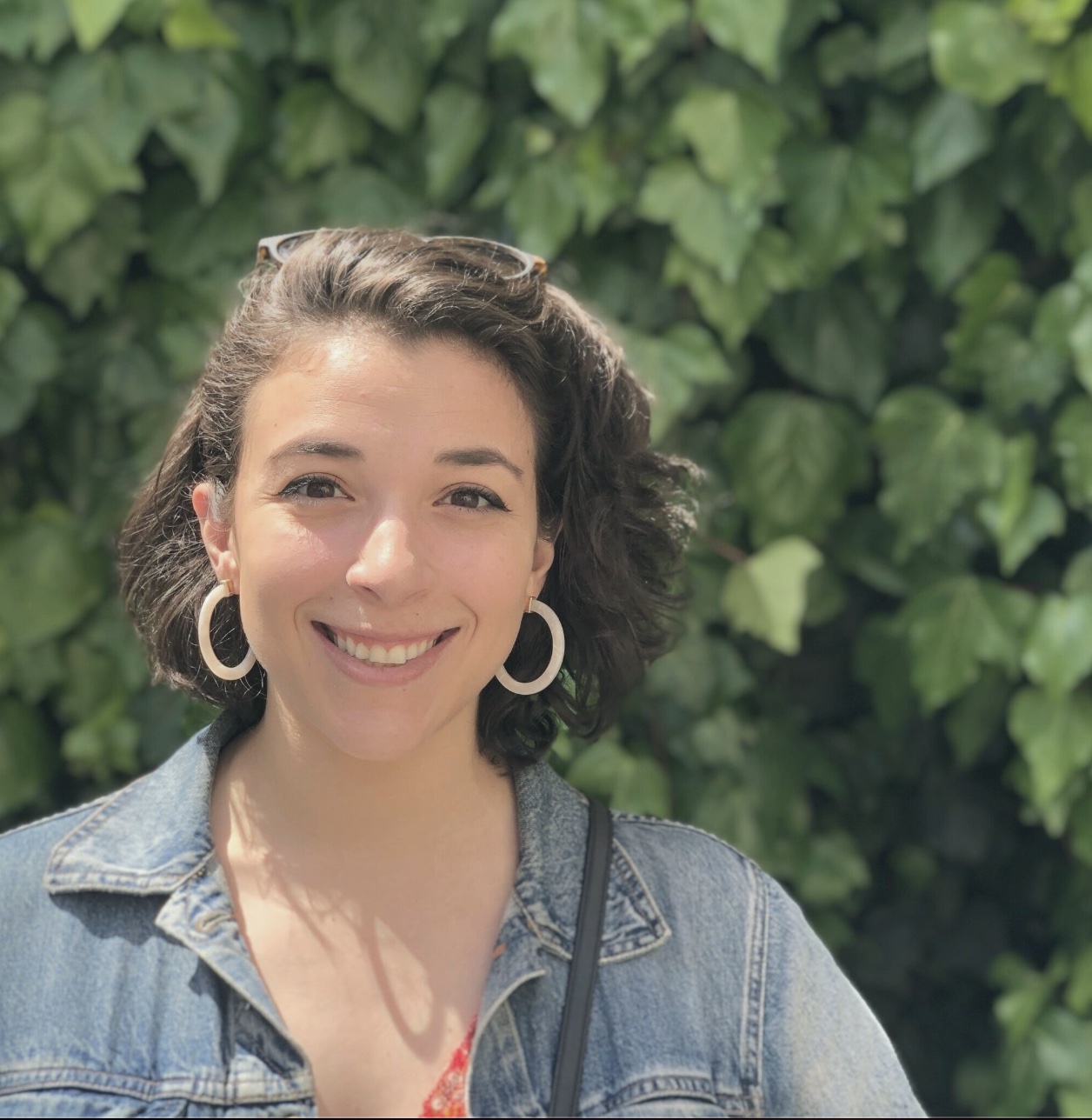
“This isn’t just about learning to be a therapist—it’s about embedding cultural humility and responsiveness into every part of the training,” Nico said. “From day one, we’re teaching students how to think about therapy through a culturally affirming lens.”
MESA students are also trained in naturalistic, evidence-based strategies such as Naturalistic Developmental Behavioral Interventions (NDBIs) and Augmentative and Alternative Communication (AAC)—practices designed to meet young children where they are, using techniques that reflect their home environments and languages.
The program isn’t limited to Spanish speakers, but the current cohort of four scholars—all of whom are bilingual in Spanish—reflects UNM’s commitment to meeting local needs. Scholars are selected from a competitive pool of applicants and supported throughout the two-year program with tuition assistance, mentorship, and community-based learning.
“Sixty-five percent of the grant funds go directly to student support,” Gevarter said. “That’s huge. It helps cover not just tuition, but other living costs like rent. We’re really trying to take a holistic view of our scholars and how we can support them beyond academics.”
MESA students also participate in Leadership Education in Neurodevelopmental and Related Disabilities (LEND), a program housed in UNM’s Center for Development and Disability. Each student completes a capstone project aimed at giving back to the community—often in the form of training workshops for families or providers.
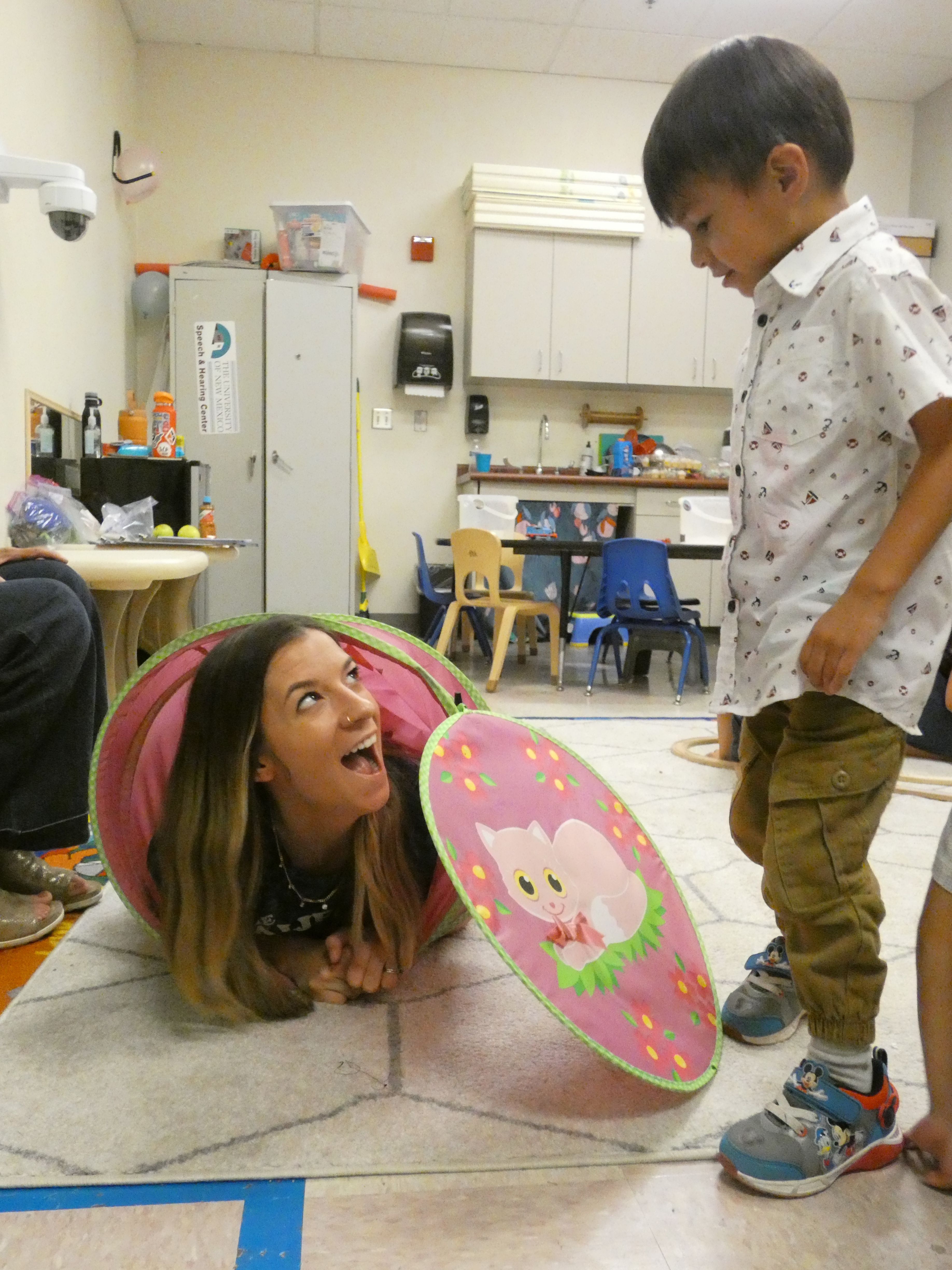
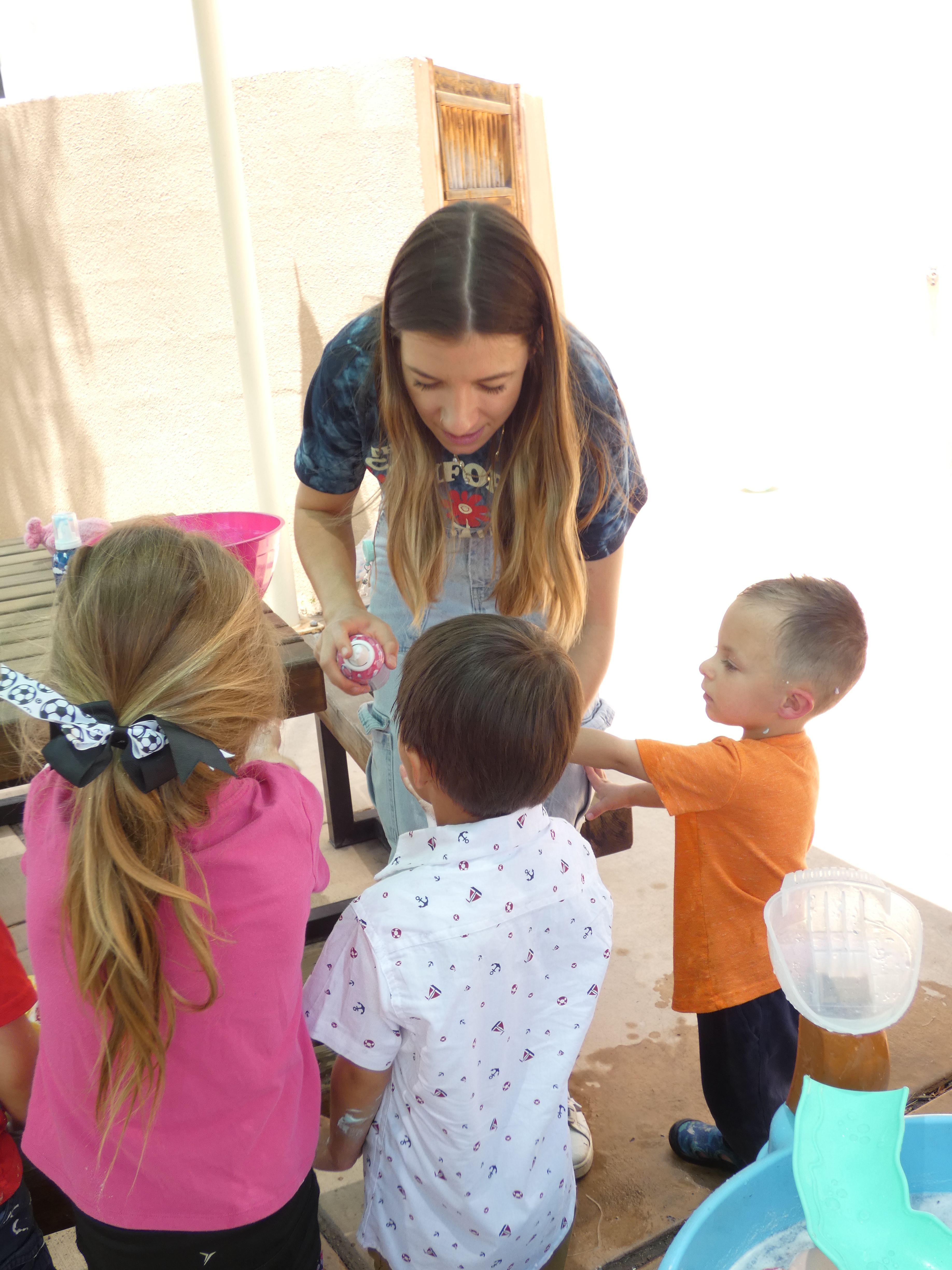
Project MESA is designed to reflect and respond to the communities it serves. Scholars complete clinical rotations in early intervention programs and schools, as well as a free bilingual summer clinic for local families with children who have characteristics of autism or other communication needs. The summer clinic will be designed based on a past grant running a similar program. The clinic will be run by Mary Hartley CCC-SLP who has worked as an SLP with children in NM for over 35 years and specializes in autism.
“We’re able to serve more families because we’re training more bilingual clinicians,” Gevarter said. “The summer clinic experience is a real highlight—it’s where students put everything into practice and families receive services they might not otherwise access.”
The program also partners with Irizarry-Pérez, a faculty member in the department who helped establish the bilingual concentration within Speech & Hearing Sciences. His research focuses on speech sound disorders in bilingual children, with particular interest in how speech skills can generalize across languages.
“Project MESA is a program I’m really proud to be a part of. It really models how collaborative efforts across areas of specialty can address the needs of our state, especially in areas where clinicians report feeling uncomfortable knowing how to serve the population, like bilingual children with autism,” said Carlos Irizarry-Pérez. “The program has helped spike interest in serving bilingual communities as well. We are seeing the highest numbers we have ever seen for enrollment in our bilingual concentration”
“We’re not trying to be the experts in everything,” Gevarter said. “Instead, we’re lifting up diverse voices and modeling collaboration—for our students, and for the field as a whole.”
Project MESA also aligns with broader campus efforts to train future professionals. A similar grant from the Department of Education’s Office of Special Education Programs (OSEP), Project SCENCES in the Department of Speech and Hearing Sciences, was the program’s first iteration. Likewise, the College of Education is home to another OSEP-funded personnel preparation grant—Early Childhood Special Education Leaders in Social Emotional Learning—an early intervention-focused program led by faculty member Chelsea Morris. Together, these grants are making a positive impact on communities across New Mexico.
By the end of the five-year grant, a total of 12 students will have completed the MESA program, with many expected to continue working in underserved areas of the Southwest.
“Even within our small cohort, there’s so much diversity in lived experience,” Nico said. “That peer support, that cultural connection—it really makes a difference. And we hope it’s just the beginning.”
Anyone interested in the free summer clinic, please email Jessica Nico at: jnico@unm.edu or check back on the website in Spring 2026.


