
Evany Lopez, an art history major, is the winner of this year’s UNM Excellence in Undergraduate Arts Research Award. Lopez is also a Mellon Mays Undergraduate Fellow. The fellowship program provides research opportunities, financial support and mentoring for undergraduate students looking to develop their research skills.
For this award, arts in various mediums are considered such as music, theater and dance, and film and digital arts.
Lopez conducted research and shared her findings in a presentation. In it, Lopez looks at the social, political, and historical aspects of protest art that occurs during International Women’s Day to bring awareness to the femicides happening in Latin America.

“The government in Mexico is very corrupted and they have time and time again ignored femicide cases and ignored feminist issues, "Lopez said. “They've defunded women's shelters and childcare services because those are institutions that women need so they can better themselves."
Lopez has been visiting Mexico since she was born. While she has happy memories there, she remembers at an early age hearing about the crimes that would happen against women.
“My project kind of focuses on the intersects of how femicide interacts with art and what kind of arts emerge through this kind of crisis,” Lopez said.
When she started studying art history, Lopez delved into studying Mexican artists that were very involved in protest against femicide. The artist Lopez studies the most is Cutzi Salgado, a Mexican performance artist.
She did a performance where she walked through the streets naked with an ice chest over her head because at the time, there were a lot of femicides occurring. Family members would find their daughter’s body dismembered in an ice chest on their doorsteps.
“I felt like her doing that performance really struck a chord with me just because I think art is always political. Always, no matter what it is," Lopez said. “And her doing that really forced people to understand what was going on and that they're more comfortable with a dead body being shown at their doorstep instead of a woman that's alive, naked.”
Through her research, Lopez has found that not many scholars talk about the unique perspective on the issue of bringing awareness to femicide with art. “Art is everywhere all the time. Protests are art. A lot of people might not think it's art, but it is. People make it and they put work into it,” Lopez said.
Lopez is excited to be part of a competition that highlights research within the arts. The winner received a $800 department award.
“I think the arts is something that's often overlooked. It's always getting defunded. I just feel like arts are what make people think critically about normal situations,” Lopez said. “Although STEM and business are both very valuable topics that we should always be writing about, I think that the arts help people look at things in a different perspective.”
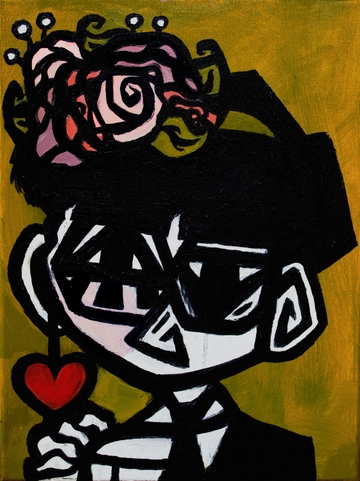
This year’s Honorable Mention went to Christopher Tran. He wrote about a method of art creation that involves rigorous research of art history combined with the creative practice of the art studio.
His goal was to assist artists dealing with writer's block to not only come up with creative ideas more efficiently, but learn more about art history in the process, the techniques that artists of the pasts have used to capture both the physical, inner, and spiritual world.
“Something that I didn't expect occurred to me while working on this project was the realization that, in a certain way, artists partake in art historism, whether they realize it or not,” Tran said. “Every artist takes inspiration from something they like, often from multiple things they like. They take and create something that becomes theirs by changing things they see as necessary to make the artwork their own.”
Honorable Mention winners receive $200 department awards. Award winners were selected by an invited panel of faculty and other artists and researchers.
This year’s panel included Ramona Emerson from the Film and Digital Media program, Colleen Sheinberg from the Department of Music, Katie Dukes-Walker of the Arts Management program, and Stephanie Woods from the Art History department.
“Judging the applications for the research award was quite interesting because of the variety of the projects presented by the students,” Sheinberg said.
“Evany Lopez's research impressed me for its depth and for the originality of her topic. Her examination of feminist performance art by Mexican artists Salgado and Mayer brought home the great importance that art can play as a tool for social change. Christopher Tran's artistic portfolio was intriguing, exhibiting his own unique style while often referencing styles of various movements in the history of art.”


